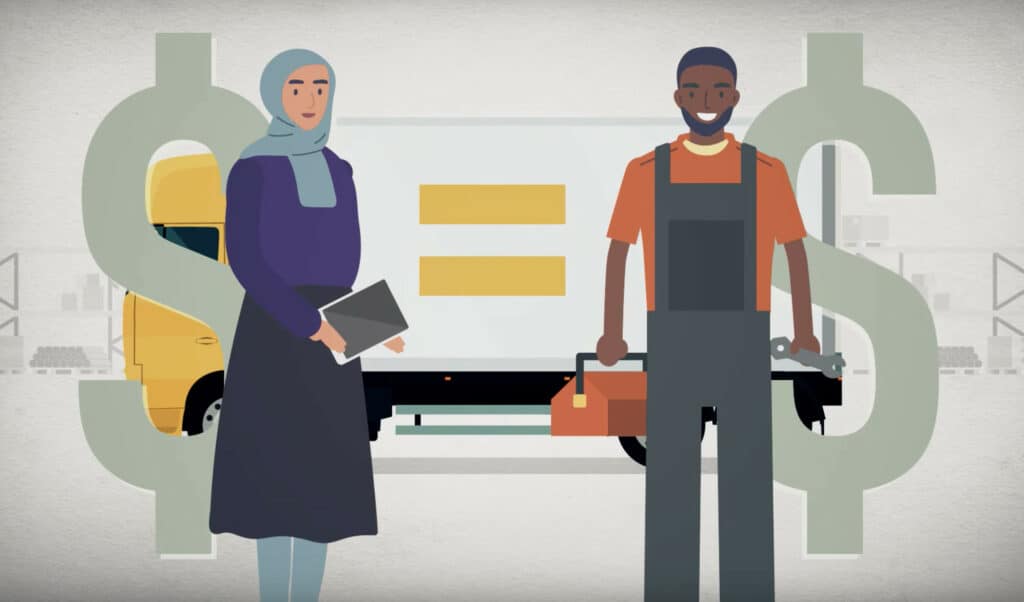
Despite all our gains for workers, a gender pay gap persists. The labour movement, feminist activists and those who care about human rights are advocates for strong pay equity laws to fix the systemic undervaluing of women’s work.
The USW’s collective agreements ensure women working in male-dominated jobs earn the same as their male counterparts. That is the legal right to equal pay for equal work.
Pay equity is different; it’s equal pay for work of equal value. It means comparing different jobs to equalize women’s pay.
For USW members working in federally regulated sectors, such as transportation, banking, communications and others, the new federal Pay Equity Act has imminent deadlines. USW locals should be involved in their workplace Pay Equity Committee to ensure the union’s interests are represented.
If you work in a federally regulated sector, you should be hearing from your USW union representatives about a Pay Equity Committee and plan for your workplace. The employer has to post a draft pay equity plan by July 3, 2024.
And what’s in it for men? Men working in undervalued female-dominated roles will see a boost from pay equity adjustments. And workers of all genders deserve a workplace that pays everyone fairly.
Pay equity benefit: local union connections
The USW represents workers at uranium mining company Cameco in Ontario and Saskatchewan in four separate union locals: 8562, 8914, 13173 and 14193.
“Because the Pay Equity Act requires one pay equity plan per employer, the locals have collaborated in a way they haven’t previously,” said USW Area Co-ordinator for Alberta and Saskatchewan Darrin Kruger, who works with Local 8914, representing Saskatchewan Cameco workers who live all over: in Alberta, Saskatchewan, Manitoba and Ontario.
“Pay Equity Committee work involves getting everyone up to speed, training USW local representatives, and it can feel overwhelming,” said Jan Borowy, lawyer and USW Pay Equity Administrator.
That’s why the union is here to help. Learn more, participate and support your local’s pay equity efforts.
usw.ca/payequity
This article appeared in the Summer 2024 issue of USW@Work magazine.
Share on Facebook