Ray White, president of Local 1-207 in Alberta, Canada, took his first union course in 1992. He knew right away he wanted to play a role in the fight for workers’ rights and has been an activist ever since.
“I enjoyed helping people and educating myself so I could be a more effective advocate,” said White.
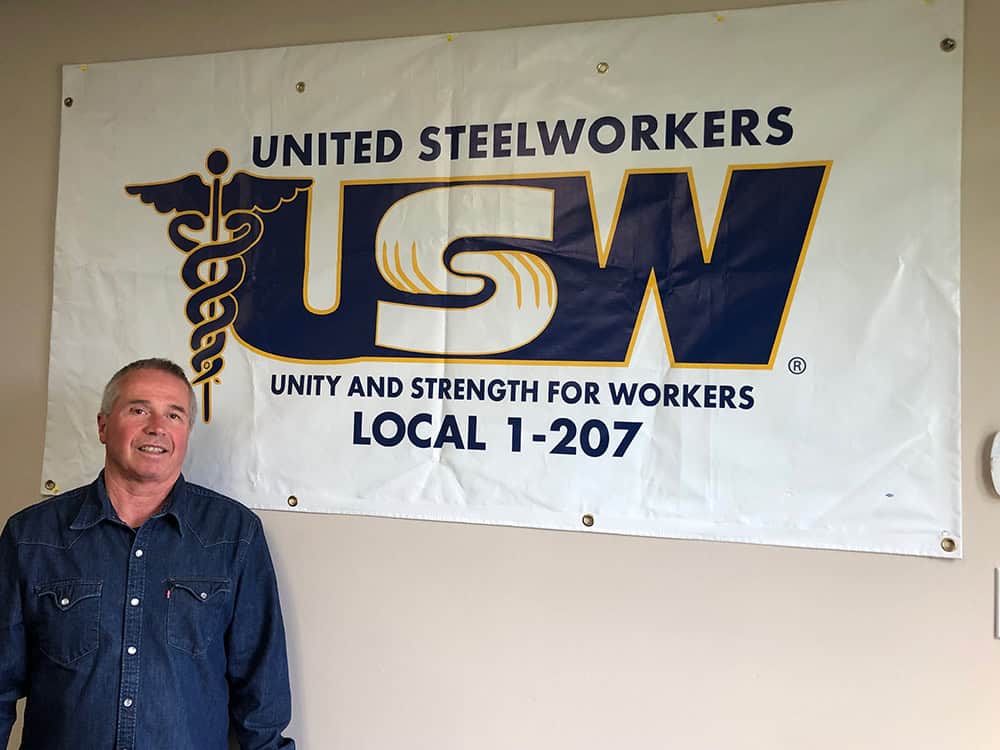
In the early 1990s, he was inspired to fully commit to the labor movement when he noticed his co-workers being treated with disrespect by his employer, Russel Metals. He now uses the knowledge and strength he’s gained throughout the years to continue standing up for fellow workers as president of a healthcare-heavy local union that includes more than 3,000 members and 38 collective bargaining agreements.
For White, who serves on the USW Health Care Workers Council as District 3 coordinator, the experience fighting on their behalf is rewarding because of the workers themselves, many of whom work for long-term care facilities that are ripe with problems like workplace violence and short staffing.
“The people that work in the healthcare industry are there because they care for some of the most vulnerable people in our society,” he said. “The emotion that these people deal with on a day-to-day basis is unbelievable.”
The one issue that White believes to be the most dire for healthcare workers is violence. To combat the epidemic, he and his fellow union members lobby the Canadian government and take to the streets to fight for health and safety laws such as the right to refuse unsafe work. He believes employers need to be held accountable and should provide all workers with the tools and support necessary to deal with incidents of violence.
“More staff and training would be a good start,” said White, “but they should also create the right setting to care for violence patients when they have those behaviors.”
One moment in White’s career that made him particularly proud of the union was when his local distributed “Working Short Forms” to their healthcare members to fill out every time they worked short-staffed. It wasn’t long before they had collected more than 600 forms, which they presented at a news conference in the Alberta Legislature in 2009.
“We spread them out on the floor and reporters from every news station in the Province took pictures of them,” he said. “Our members could see how working together brought their issue to the public like never before.”
When not fighting on behalf of healthcare workers, White enjoys taking it easy out in the wild with a camping trip or kicking into high gear on an ATV ride.
Share on Facebook