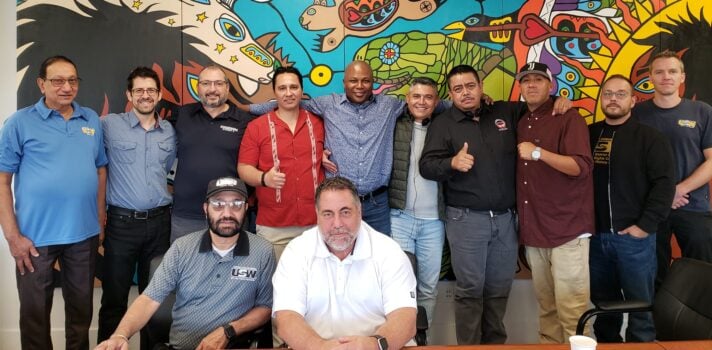
Wednesday afternoon delegates heard from the National Indigenous Committee and the newly appointed District 3 and 6 Indigenous Engagement Co-ordinators. Panelists shared their insights on the importance of supporting and engaging Indigenous members.
“By offering encouragement and opportunities for advancement within our union, we first must give Indigenous members the opportunity to self-identify as First Nations, Inuit or Metis. Then we can ask our Indigenous members what their needs are within their communities and offer solutions,” Merv King (USW Local 8300) told delegates.
Delegates then heard from several speakers that education is key for our path towards reconciliation. Following a recommendation at the National Gathering of Indigenous Steelworkers, the USW has developed “Unionism on Turtle Island”, a five-day course to learn more about our shared history and how we can work for more justice in the present.
“It is very heavy content covering reconciliation and how the union and how allies can support reconciliation. I really encourage everybody, if you have the opportunity, to take the course,” shared Chelsea Olar, USW Local 2251.
“We need to have better reconciliation,” Tshakapesh Jérome, USW Local 7493 told delegates. “We all must get out of our comfort zone. If we work together, everyone will know our unity is our strength. So, it’s important to get to know your Indigenous members too.” Jérome encouraged and invited delegates to visit Indigenous communities and talk to the Elders and ask them to participate in the union.
Earlier this year, the USW hired two new Indigenous Engagement Co-ordinators for a 10-month pilot project to help us engage, understand and better work with Indigenous communities. Julia McKay will lead this important work in District 3 and Josh George in District 6.
“I’ve been reaching out to area coordinators, staff representatives, local union officers and members throughout our district asking questions about their experiences, hearing about the successes, and hearing about the struggles,” McKay shared with the delegates. “The conversations that we’re having also reaffirmed the alignment of our overall principles. It’s also been clear that we need to advocate more in bargaining, we need to advocate more when considering the future needs of the Indigenous members of our communities, and it became clear that there is such a powerful drive among so many of our leaders to help and to do more.”
online pharmacy
metformin no prescription pharmacy
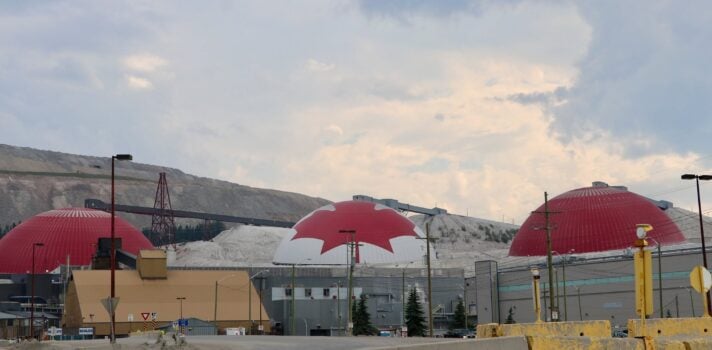
Our engagement doesn’t end inside our union, more needs to be done to engage Indigenous communities, especially when it comes to the transition of our jobs into the green economy. McKay pointed out that polluted water from mines in her area has been running into the Elk River contaminating the local fish supply. She urged delegates to engage Indigenous communities and consult with them to have more input and to be part of environmental assessments. “By running decisions through an Indigenous lens, we’re adding Indigenous knowledge that will help shape laws moving forward and help give our Indigenous members and Indigenous communities more of a voice when it comes to the laws governing us.”
Share on Facebook